April in the Blue Ridge is a month of contradictions. You can start a hike in shorts and a t-shirt, hit a ridgeline where the wind drops the feels-like temperature by twenty degrees, and crawl into your tent at night wondering if you packed enough insulation. Spring camping in Virginia is some of the best camping anywhere in the country, but it demands gear that can handle a wide temperature range without weighing you down.
That is exactly what makes the sleeping bag choice so important, and why we keep pointing people toward the Big Agnes Torchlight 30.
Understanding Temperature Ratings
A sleeping bag's temperature rating tells you the lowest temperature at which the bag will keep an average sleeper comfortable. A 30-degree bag is the sweet spot for three-season camping in the mid-Atlantic. It keeps you warm on chilly spring and fall nights that dip into the mid-30s, and it is not so hot that you are sweating through mild summer evenings.
Here is the thing most people get wrong: the rating assumes you are sleeping on an insulated pad, wearing a base layer, and the bag is properly lofted. If you are sleeping on a bare ground pad in a cotton t-shirt, a 30-degree bag might leave you cold at 40 degrees. Context matters.
Why the Torchlight 30 Stands Out
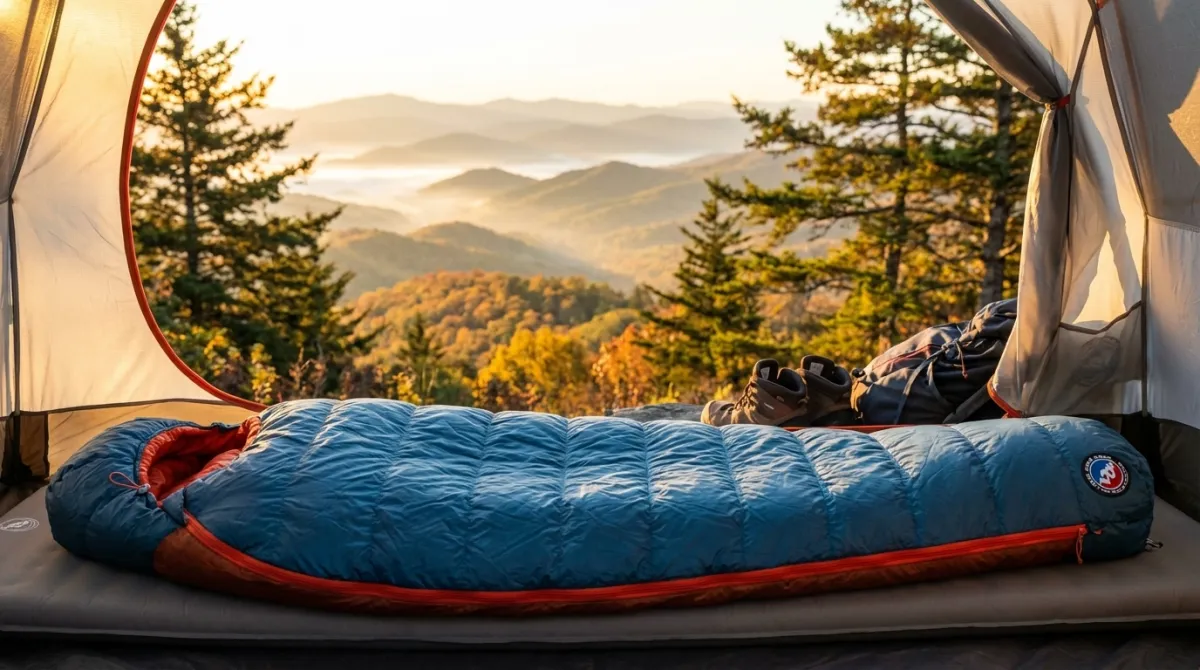
The Big Agnes Torchlight 30 does something clever that most sleeping bags do not. It has two expandable panels that run from the shoulders to the footbox, adding up to ten inches of extra sleeping space when you need it. On warm nights, you unzip the panels for more ventilation and room to move. On cold nights, you cinch them down for a snug, heat-trapping fit.
This adjustability solves the biggest frustration with traditional mummy bags: the claustrophobic feeling that makes restless sleepers miserable. You get the thermal efficiency of a mummy shape with the option to open things up when the temperature allows.
"Most people who say they hate sleeping bags actually hate restrictive sleeping bags. The Torchlight changes that conversation completely." -- Moss Mountain Outfitters Team
Down vs. Synthetic: The Right Choice for Spring
The Torchlight uses DownTek water-repellent down insulation, which addresses the one historic weakness of down sleeping bags: moisture. Traditional down clumps and loses its insulating power when wet. DownTek-treated down resists moisture absorption, dries faster, and maintains loft even in humid conditions. For spring camping in Virginia, where dew, condensation, and the occasional surprise rain shower are facts of life, water-repellent down is a genuine advantage.
We also carry synthetic-fill options like the Big Agnes Sunbeam 30 for customers who want a lower price point or who camp exclusively in wet environments. Synthetic fill maintains warmth even when soaked, costs less, and is easier to care for. The trade-off is more weight and bulk for the same temperature rating.
Quick Comparison
- Torchlight 30 (Down): $299.95 | ~2 lbs | Packs small | Best warmth-to-weight | Water-repellent treated
- Sunbeam 30 (Synthetic): $179.95 | ~3 lbs | Bulkier pack size | Warm when wet | Easier to wash
Features That Matter on the Trail
Pad Compatibility
The Torchlight includes Big Agnes's integrated pad sleeve system, which holds your sleeping pad in place underneath the bag. This prevents the midnight roll-off that wakes you up on cold ground. If you are a side sleeper or someone who moves around at night, this feature alone is worth considering.
Draft Collar and Zipper
A draft collar around the shoulders seals in warmth when temperatures drop. The full-length zipper is smooth and snag-free, which sounds like a small thing until you have spent five frustrated minutes at 2 AM trying to unzip a cheap bag to cool down. Big Agnes gets the hardware right.
Stuff Sack and Storage
The bag comes with a stuff sack for trail use and a large cotton storage bag for home. Never store a down bag compressed, as it damages the loft over time. Hang it in a closet or use the storage bag between trips.
Matching Your Bag to Blue Ridge Conditions
Here is a quick guide based on elevation and season:
- Valley camping (under 2,000 ft): A 30-degree bag handles March through November comfortably
- Ridge camping (2,000-4,000 ft): A 30-degree bag works April through October; add a liner for early spring
- High elevation (4,000+ ft): Consider a 15-degree bag for spring and fall; the 30-degree works June through September
For most Danville-area campers hitting spots like Philpott Lake, Fairy Stone, or the lower sections of the Blue Ridge Parkway, the 30-degree rating covers the vast majority of camping nights from early spring through late fall.
Our Recommendation
If you are buying one sleeping bag to cover three seasons of camping in the Blue Ridge, the Big Agnes Torchlight 30 at $299.95 is the best investment you can make. The expandable panels give you temperature versatility that other bags simply cannot match, the DownTek fill handles Virginia humidity, and the weight makes it viable for both backpacking and car camping.
Come to the shop and get inside one. We keep bags on display so you can zip in, test the expandable panels, and feel the difference between down and synthetic options. A few minutes of hands-on comparison will tell you more than any review. Browse all Big Agnes sleeping bags in our shop, find camping destinations on our trail finder, or build a complete sleep system with the Kit Builder.
Shop the Big Agnes Torchlight 30
Expandable comfort, water-repellent down, three-season versatility. $299.95.
Shop This ProductHead up. Eyes forward. Sleep warm out there.